

Louisiana State University’s flagship campus is in Baton Rouge, Louisiana, with the Welcome Center serving as a useful first stop for campus visitors.
For a visit, get oriented there, use LSU’s parking map to plan where to leave your car, and check game-day details separately if you’re heading to Tiger Stadium. The campus can also fit into a one day in Baton Rouge itinerary.
- Location: Baton Rouge, Louisiana
- Visitor starting point: Welcome Center, at Highland Road and Dalrymple Drive
- Parking: LSU provides a virtual map of visitor parking locations and parking zones

Getting oriented on the LSU campus
The Welcome Center is a practical first stop for maps, directions and parking help on the LSU campus. LSU Parking and Transportation places it at the corner of Highland Road and Dalrymple Drive, where staff can help you work out where to go next.
Begin there if you need to orient yourself before heading to a specific campus destination. If you’re driving, check the visitor parking map before choosing a lot; campus parking zones and restrictions can affect where you can leave your vehicle.
How do you use the Louisiana State University map?

LSU’s virtual parking map shows visitor parking locations and parking zones, so use it to match your destination with an appropriate place to park. The Welcome Center is another option for getting a map and directions from staff.
Parking details can change, and LSU’s visitor parking information includes different rates and permit options across its resources. Before setting out, review the current guidance and choose the option that applies to your visit.
What should you know about Tiger Stadium on game day?
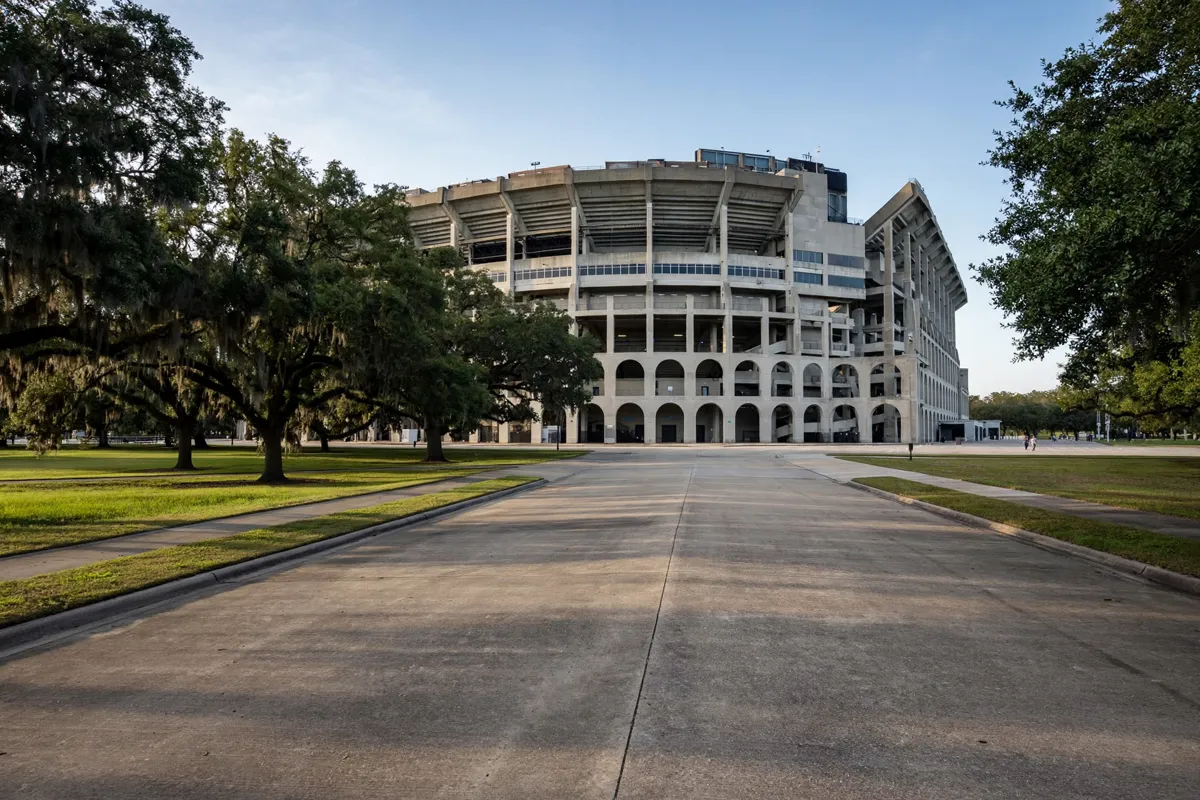
Tiger Stadium has specific entry, parking and bag rules for LSU football games, so check the current LSU Athletics guidance before travelling to a game. Stadium gates open two hours before scheduled kickoff; suite and club areas open three hours before kickoff.
Every attendee needs a ticket, regardless of age. The stadium is also a no-re-entry venue: after a ticket has been scanned, leaving means you need a new, unused ticket to return, unless LSU Event Management or public-safety officials direct otherwise during an emergency.
The clear-bag policy allows clear tote bags no larger than 12 by 6 by 12 inches, one-gallon clear plastic freezer bags, and small handheld clutch purses no larger than 4.5 by 6.5 inches.
Bags and other items may be inspected. Guests may bring one empty beverage container and one factory-sealed water bottle of 32 ounces or less; outside food and other containers, including coolers, bottles, cans, cups and flasks, are prohibited.
Football parking is regulated. Follow designated parking areas, signs and instructions from LSU Police and Parking Services personnel. LSU Athletics provides pregame and postgame parking maps, color-coded zone maps, inbound directions and a live game-day traffic map through Waze. An ADA shuttle runs from Lot 406 to assist guests travelling to and from the stadium near Lot 412.
How do you get to campus from American Inn?

Louisiana State University is about a 13-minute drive from American Inn. If you’re driving, use LSU’s visitor parking map to check the available locations and zones before heading to campus.
If your campus visit coincides with a local event, the Baton Rouge events and festivals guide can help you plan around what’s happening in the city.
Before you go: Parking details and game-day rules can change, so check the official LSU site before you go.
FAQs
Where should campus visitors start?
The Welcome Center at Highland Road and Dalrymple Drive is a first stop for maps, directions and parking help.
Does LSU provide a visitor parking map?
Yes. LSU publishes a virtual map showing visitor parking locations and parking zones.
How early do Tiger Stadium gates open?
For LSU football, stadium gates open two hours before scheduled kickoff. Suite and club areas open three hours before kickoff.
Can you leave Tiger Stadium and come back in?
Tiger Stadium is a no-re-entry venue. If you leave after your ticket is scanned, you need a new, unused ticket to return, except when officials direct otherwise during an emergency.